Quick Overview
- Owl feathers are specially structured to allow nearly silent flight, helping owls hunt effectively at night.
- Their feathers have unique features like fringed edges, soft surfaces, and velvety textures that reduce sound during flight.
- Owls replace worn feathers through a process called molting, which keeps their wings efficient for hunting.
- Owl feathers are federally protected in the United States under the Migratory Bird Treaty Act, making it illegal to collect or possess them without permits.
Why Owl Feathers Are So Fascinating
Owl feathers are a remarkable example of nature’s engineering. Every feather plays a role in helping owls survive as nighttime hunters.
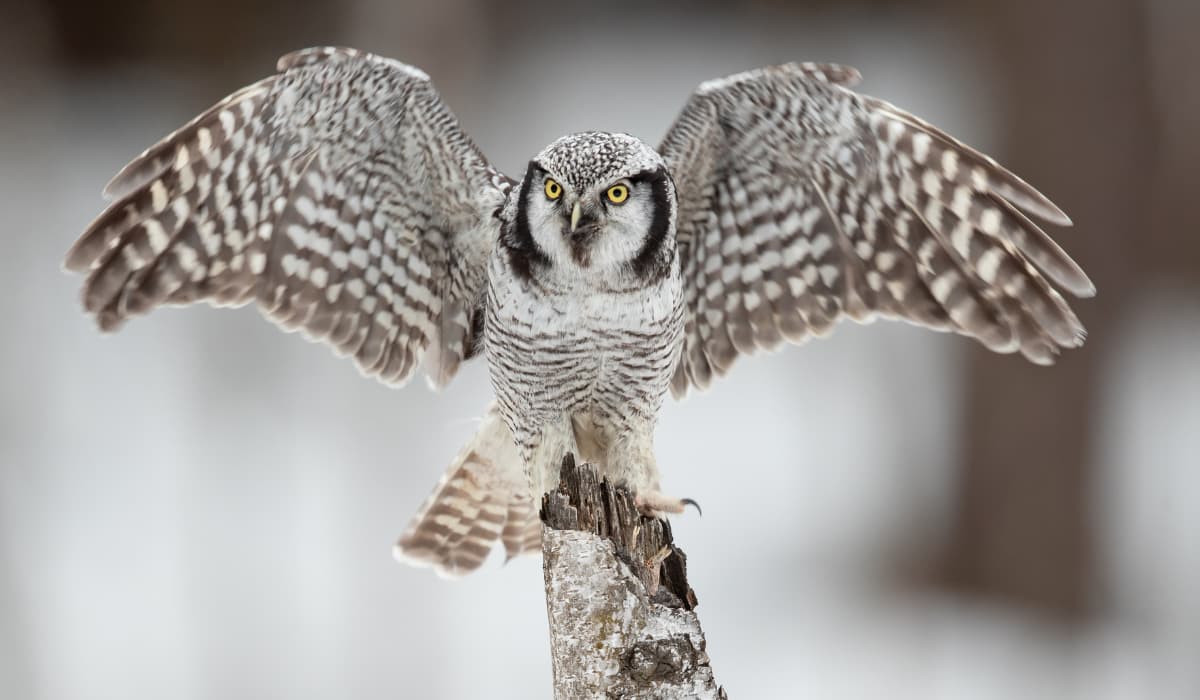
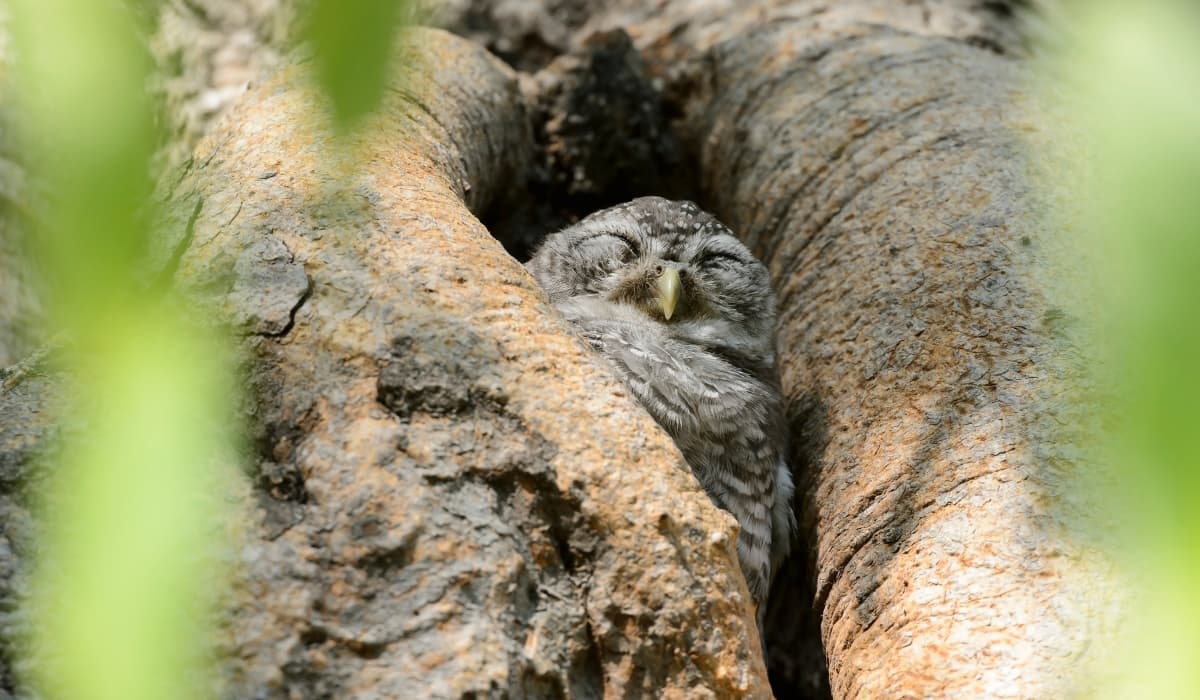
Their patterns provide camouflage, allowing owls to blend into tree bark, barn rafters, and rocky landscapes while they rest during the day. Their layered structure traps air for insulation, protecting them from cold nighttime temperatures. And their incredibly soft texture allows them to fly with extraordinary silence.
When you watch an owl glide silently through the darkness, you are witnessing millions of years of evolutionary owl adaptations in motion.
How Owl Feathers Allow Silent Flight
Owls are among nature’s most specialized hunters, and their feathers play a huge role in that success.
Unlike many birds that rely on speed or bright displays, owls rely on stealth.
Their large wingspan, together with the way their feathers are built, allows them to glide slowly through the air with gentle, quiet wingbeats.
This quiet flight is essential because owls hunt primarily by sound. Many species can locate prey in complete darkness by listening for the faint rustle of a mouse moving through grass or leaves.
There are mainly three unique feather adaptations that help keep owls nearly silent in the air.
Fringed Leading Edges
If you look closely at an owl’s wing feathers, the front edge isn’t smooth like those of many other birds. Instead, it has tiny comb-like projections that resemble the teeth of a saw.
These serrated edges break up the turbulence that forms when air flows over the wing. Instead of producing a single loud rush of air, the serrations divide it into smaller streams, dramatically reducing noise.
Velvety Feather Surface
Owl feathers also feel very different from the feathers of most birds. They have an unusually soft, almost velvety texture.
This softness comes from microscopic hairlike filaments on the feather surface. These structures help absorb sound and reduce friction as feathers slide against one another during flight.
Rather than creating the rustling sound typical of many birds, owl feathers move smoothly and quietly.
Soft Trailing Edges
The trailing edges of owl feathers are also unique. Instead of forming a stiff, sharp edge, they are soft and slightly frayed.
These flexible edges help smooth the airflow as it leaves the wing, reducing turbulence and further minimizing sound.
Other Types of Owl Feathers
In addition to the specialized wing feathers that make silent flight possible, owls have other types of feathers that help them survive in the wild.
Body feathers, also called contour feathers, give the owl its smooth shape and help protect it from the elements.
Beneath them are soft down feathers that trap warm air and help keep the owl insulated during cold nights.
Molting: How Owls Replace Their Feathers
Feathers may appear delicate, but they endure constant wear from hunting, flying, and exposure to the elements. Over time, they gradually weaken and must be replaced.
Owls replace old feathers through a process called molting.
Molting happens gradually, so the bird can continue flying and hunting. Instead of losing many feathers at once, new feathers grow in while older ones fall out.
For many owls, including barn owls, this process can take months or even longer. This slow replacement ensures the bird always maintains the balance and lift needed for flight.
Feathers and Injured Owls
Feathers play such a critical role in flight that damage to them can have serious consequences for wild owls.
If a major flight feather becomes damaged unexpectedly, it can temporarily affect the owl’s ability to hunt or maneuver in the air.
Owls may lose or damage feathers due to accidents or environmental hazards such as:
- vehicle strikes
- barbed wire or fencing
- collisions with structures
- poisoning from contaminated prey
When an injured owl comes into a wildlife rehabilitation center, one of the first things rescuers check is the condition of its feathers. Flight feathers are critical for survival, so if they’re badly damaged, the owl may need to stay in care until new ones grow in during the natural molting process.
Once the owl can fly strongly again and hunt the way it should, it can be released back into the wild.
Rehabilitation centers play an important role in giving injured owls a second chance, helping them recover and return to the skies where they belong.
Why Owl Feathers Are Federally Protected
Many people are surprised to learn that owl feathers are protected by federal law in the United States.
Under the Migratory Bird Treaty Act, it is generally illegal to collect, possess, sell, or trade feathers from most native bird species without special permits.
These protections exist because, in the late 1800s and early 1900s, feathers became extremely popular in fashion. They were used to decorate hats, clothing, and accessories, and millions of birds were killed just for their feathers.
The law was created to stop that practice and protect wild birds from being hunted for ornamental use.
Today, the Migratory Bird Treaty Act protects hundreds of bird species, including owls, helping ensure these remarkable birds remain part of our ecosystems.

Feathers in Wildlife Education and Rehabilitation
Although most people can’t legally collect owl feathers, licensed wildlife rehabilitators may sometimes keep them with special permits for educational purposes. These feathers are often used to help teach people about birds and wildlife conservation.
Some educators keep framed displays with feathers from different raptor species—like Cooper’s hawks, red-tailed hawks, barn owls, and great horned owls—so students can compare their sizes, textures, and patterns. During school visits or outreach programs, kids might even get the chance to gently hold a feather while learning how birds fly and hunt.
That kind of hands-on experience can really stick with people and help spark a lifelong appreciation for wildlife.
To balance conservation with cultural traditions, the U.S. Fish and Wildlife Service also operates feather repositories. These programs collect naturally shed feathers—or feathers from birds that have died naturally—and distribute them to enrolled Native American tribal members for ceremonial use.
Why Collecting Feathers Can Harm Owls
The rules around feather possession exist for a reason.
Historically, feathers were highly prized in fashion and decorative clothing. Because they were so valuable, birds were often killed simply to obtain their feathers, and entire populations suffered as a result.
Wildlife protection laws were created to stop this practice. By making it illegal to collect, sell, or trade feathers from protected birds, these laws remove the incentive for people to harm birds for their feathers.
Today, those protections help ensure that owls and other birds remain part of healthy ecosystems rather than becoming targets of the feather trade again.
What To Do If You Find an Owl Feather

Finding a feather in nature can be exciting, especially if you suspect it came from an owl.
However, because of the laws protecting them, wildlife experts generally recommend leaving feathers where you find them.
If you are curious about a feather you discover, there are still several ways to learn more about it:
- Take a photograph of the feather in its natural location
- Look for identifying patterns or colors
- Contact a local wildlife center or nature organization
- Share your photos with bird educators or naturalists
This allows you to learn about wildlife while still respecting the laws designed to protect birds.
Supporting Owl Conservation
Every owl feather tells a story—of silent wings gliding through the night, careful hunts in moonlit fields, and millions of years of evolution shaping one of nature’s most remarkable hunters.
The more we learn about how owls live, hunt, and survive, the more we realize how important it is to protect them and the ecosystems they depend on.
You can support owl conservation in simple but meaningful ways:
- Avoid using rodent poisons that can harm owls and other wildlife
- Protect natural habitats where owls hunt and nest
- Share owl education resources to help others learn about these birds
- Watch and share our owl livestream that spreads awareness
- Support mission-driven wildlife education and conservation efforts
Even small actions can make a real difference for the owls that share our landscapes.
![Every Tee Tells a Story – From rescues to rodent control, our designs speak up for owls. [Shop Owl-Inspired Apparel]](https://ramonabarnowls.com/wp-content/uploads/Every-Tee-Tells-a-Story-1.jpg)
![Book the Fairy Owlet Mother – Bring Stacey’s owl magic to your school or event. [Book a Presentation]](https://ramonabarnowls.com/wp-content/uploads/Book-the-Fairy-Owlet-Mother-1.jpg)

![Matching fits for the whole flock. Because protecting wildlife is even sweeter when you do it together. [Shop the Family Collection]](https://ramonabarnowls.com/wp-content/uploads/Matching-fits-for-the-whole-flock-1.jpg)


![Ridiculously Soft Whoo-Wear [Shop Now]](https://ramonabarnowls.com/wp-content/uploads/Ridiculously-Soft-Whoo-Wear-1.jpg)
![Hoot Happiness Guarantee – Shop risk-free with free returns & exchanges. [Shop Now]](https://ramonabarnowls.com/wp-content/uploads/Hoot-Happiness-Guarantee-1.jpg)
![Subscribe on YouTube – Join 1,000+ owl lovers following our live owl adventures. [Subscribe Now]](https://ramonabarnowls.com/wp-content/uploads/Subscribe-on-YouTube-1.jpg)