


Quick Overview:
- Humane mouse control works best when you combine multiple methods instead of relying on one quick fix.
- Rodenticides (mouse poison) can harm owls, hawks, pets, and other wildlife through secondary poisoning.
- Installing owl boxes and avoiding rodenticides can help restore natural predator populations and support poison-free pest control.
- Humane mouse control is not a one-time fix — it requires ongoing consistency and maintenance.
How to Get Rid of Mice Humanely
If you’re here because you’ve got mice you’d like to get rid of, you’re probably just looking for practical solutions that actually work. You want them gone quickly, safely, and preferably humanely.
But before we get into how to get rid of mice humanely, we need to talk about how not to do it. Because the most common solution people reach for is also the one causing the most damage.
Rodenticides.
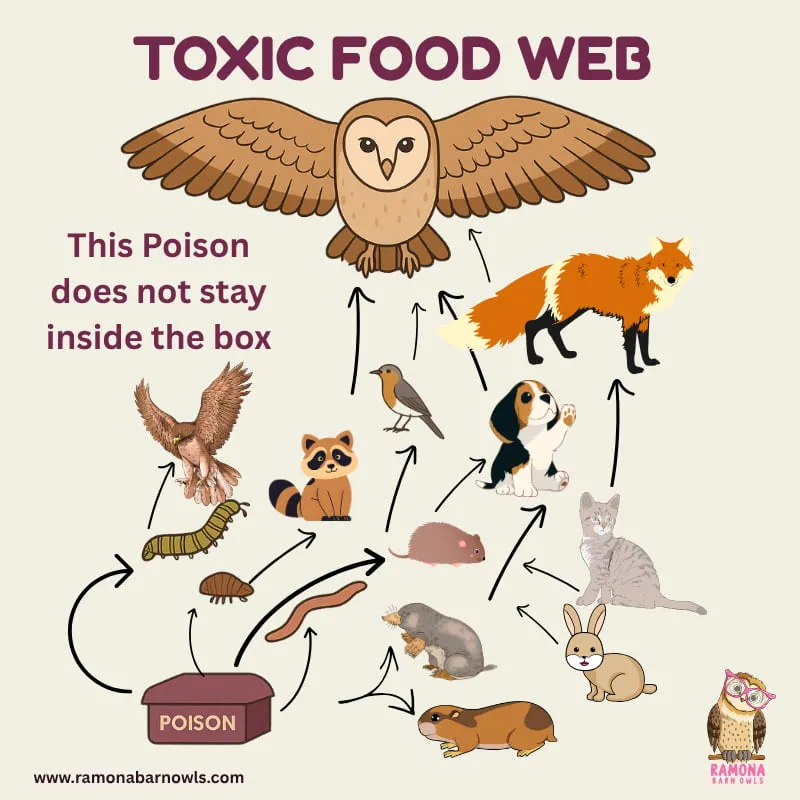
When you put out mouse poison, you’re not just dealing with mice—you’re setting off a chain reaction. The mouse eats the poison, but it doesn’t die right away. It wanders, slows down, becomes easy prey. Then something else eats it—a hawk, a fox, a neighborhood cat… a barn owl. At Ramona Barn Owls, we see this play out over and over again as we watch our owl boxes on our 24/7 owl livestream. We watch them raise babies, bring food back to the nest, and show up night after night. Like Logan, Storm’s loyal partner, who was always there providing for his family. Then one day in March, he simply never came back. We don’t know for certain what happened, but when a healthy, active owl suddenly vanishes, the most common causes are a car strike… or rodenticide.
We’ll dig deeper into how rodenticides affect barn owls and other wildlife in a bit—but first, let’s talk about what actually works. Because mice are a problem, and there are better ways to deal with them without setting off that chain reaction.
How to Get Rid of Mice Humanely (What Actually Works)
Here’s the truth most pest control ads won’t tell you: rather than a one-time fix, humane mouse control is about consistency and a combination of preventative methods.
You have to look at your specific situation to figure out the best solution for you. Are they getting in through gaps in your walls? Nesting somewhere cluttered? Finding an easy food source?
The answer to why they’re there determines how you get them out—and more importantly, how you keep them out.
Even our very own Fairy Owlet Mother, Stacey Mae Rudge—who has around 25 owls living on her property at any given time—still takes other preventative steps around her home.
Because even with nature on your side, you still have to do your part.
1. Seal Mice Out
Mice can squeeze through openings as small as a dime, which means sealing entry points is one of the most effective things you can do.
Use steel wool, insulating foam, caulk and door sweeps to close gaps. Check around pipes, vents, and foundations. This step alone can drastically reduce your problem, because if they can’t get in, they can’t settle in.

2. Remove the Buffet
Mice stick around where food and water are easy to access.
Store pantry items in sealed containers. Clean up crumbs (yes, even the tiny ones). Secure trash lids. Don’t leave pet food out overnight. Even clutter can give them nesting material, so reducing hiding spots matters more than people think.

3. Humane Mouse Traps
There are a lot of options out there now, and some of them are honestly pretty creative. You’ve probably seen the little “rat hotels,” bucket traps with spinning rods, and all kinds of live-catch setups that promise a more humane approach.
And yes—those can work.
But here’s the part that often gets skipped over: what happens next matters just as much as the trap itself.
If you’re using a live trap, you’re taking on the responsibility of checking it frequently and handling the situation humanely. Mice are territorial and nest-oriented, which means relocating them far away doesn’t usually lead to a happy ending. More often than not, it leads to stress, disorientation, and eventually death anyway.
So while live traps sound like the gentler option, they often just delay the outcome rather than improve it.
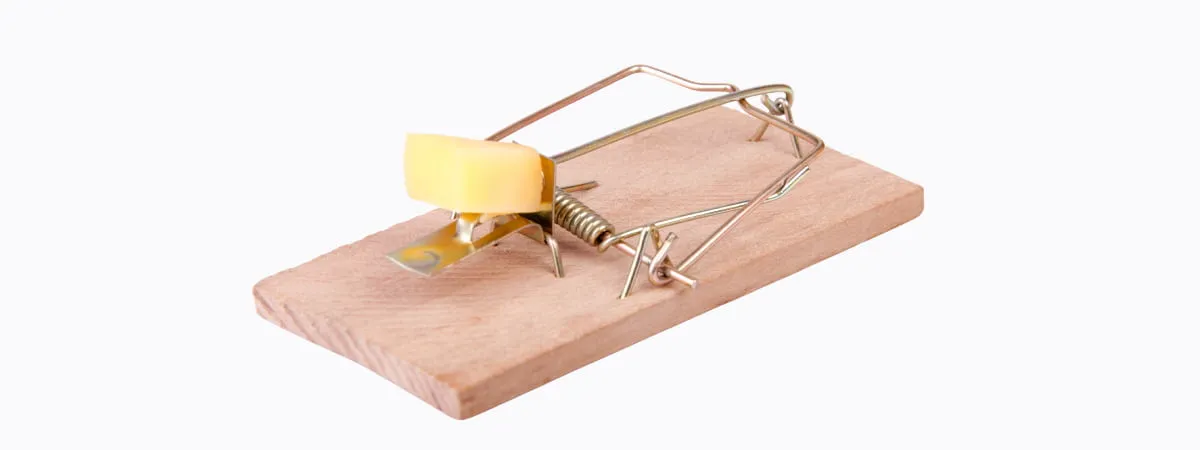
That’s why, in many cases, a properly set snap trap is actually considered more humane. It’s quick. It’s effective. And it avoids prolonged suffering. These days, they’ve even come a long way—there are enclosed designs and even Bluetooth-enabled traps that alert you when one has been triggered, so nothing sits longer than it should.
Glue traps, on the other hand, are a hard no. They cause slow, distressing deaths and often trap non-target animals, which makes them one of the least humane options out there.
At the end of the day, humane mouse control isn’t just about the tool you choose—it’s about using it responsibly, consistently, and with the full picture in mind.
4. Ultrasonic devices
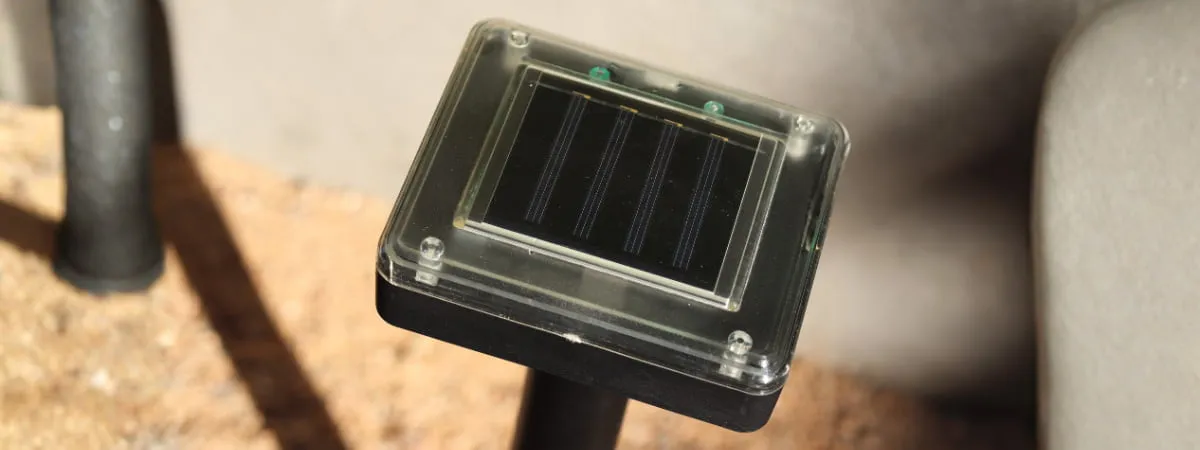
Ultrasonic devices are another option people use, particularly for cars or garages. There are even solar-powered versions for outdoor use and models that can be professionally installed in vehicles to prevent nesting in engine compartments.
However, ultrasonic devices should never be relied on as a standalone solution. Like most humane mouse control methods, they work best when combined with other preventative measures such as sealing entry points, removing food sources, and reducing nesting opportunities.
It’s also important to avoid using ultrasonic devices if you have pet rodents, such as hamsters, gerbils, rats, or mice, as the sound frequencies may cause them stress and discomfort.
5. Natural Mice Deterrents: What Helps vs. What’s Hype
This is where things get a little tricky, because not everything labeled “natural” is actually harmless once it’s introduced into your environment.
At the Wildlife Research Institute, one of the simplest rules we come back to is: don’t add things to the environment that don’t belong there.
Take chrysanthemum-derived compounds, for example. They’re often used as natural insecticides to kill ants, mosquitoes, and fleas… but they can also affect the nervous systems of bees and other beneficial insects.
And that’s the thing—once something is out there, it rarely stays targeted to just one species.
That said, there are some lower-impact options that can help when used thoughtfully and consistently, especially in enclosed areas.
Peppermint oil is one of them. It’s not a miracle fix, but it can help deter mice when used regularly and paired with other preventative methods.

6. Invite Owls to Your Property
Nature already built one of the most effective rodent control systems out there.
Barn owls.
A single barn owl family can eat over 1,000 rodents in a year—quietly, efficiently, and without introducing anything harmful into the environment. No chemicals. No chain reaction. No unintended consequences.
When you stop using rodenticides, something really interesting happens—you start to see more natural predators return. Owls, hawks, and other raptors begin to reclaim their role, and over time, that creates a more stable, long-term solution to your rodent problem.
If you want to take it a step further, you can actually invite barn owls to your property by installing an owl box in the right location. It’s one of the most impactful, poison-free ways to support both your home and the surrounding ecosystem.
That said, placement matters. You want to make sure the box is installed in a safe, appropriate spot—somewhere owls won’t be at risk from predators, traffic, or other hazards. A poorly placed box can do more harm than good, so it’s important to set it up thoughtfully.

How to Get Rid of Mice in Your Car
Cars are one of those places where mice can do surprising damage—chewing wires, nesting in engines, turning your vehicle into a tiny, very inconvenient apartment.
This is where consistency really matters. For the best results, use peppermint spray, ultrasonic devices, and deterrent pouches together rather than relying on any single deterrent.
Peppermint spray under the hood every couple of weeks can help deter nesting. Ultrasonic devices installed by a professional can create an environment they don’t want to stick around in. Some people use deterrent pouches in wheel wells or near entry points.
And sometimes, if an infestation is bad enough, leaving the hood open temporarily can discourage them from settling in.
So What’s the Best Rodent Solution?
The key here is not relying on just one method. Humane mouse control works best when you combine strategies and stay consistent over time.
If you’re dealing with an active infestation, the goal is twofold: get them out, and then keep them out.
That means sealing entry points, removing food sources, using traps responsibly, and maintaining deterrents where needed. It’s not a one-time fix—it’s a system.
And here’s the part we love: when you stop using rodenticides, you naturally allow predators like owls and hawks to return, creating a more balanced, long-term solution.
Why Rodenticides Don’t Work (And What They’re Really Doing)
You’ve probably seen those black boxes outside grocery stores or along buildings.
They’re filled with poison.
And here’s the problem: it doesn’t stay contained. Anything that goes into that box—a mouse, a rat, and earthworm, a frog—becomes a toxic package. If a pet gets ahold of it, or a predator eats the poisoned animal, that toxin moves right up the food chain.
Owls and hawks are especially vulnerable because rodents are a huge part of their diet. Research from organizations like the Barn Owl Trust and the United States Geological Survey has documented widespread secondary poisoning in raptors, showing that anticoagulant rodenticides can build up in their bodies over time and lead to slow, internal bleeding.
This is why the idea that poison “only kills one animal” is simply not true.
It keeps going.
And here’s the kicker—it’s not even effective.
You might see results the first year. Maybe even think, “Wow, that worked.” But over time, there’s a sharp decline in effectiveness. Why? Because you didn’t just remove mice—you disrupted the entire ecosystem. The hawks, the owls, the natural rodent control system… gone or weakened.
So now, instead of a balanced system working for you, you’re stuck in a cycle of dependence on poison that keeps failing you.
How You Can Be Part of the Solution
You came here looking for a way to get rid of mice.
And hopefully, you found one.
But maybe you also found something else—that this isn’t just about mice. It’s about the bigger system they’re part of.
Start by avoiding rodenticides.
Then, simply sharing what you’ve learned goes a long way. It’s what we do every single day at Ramona Barn Owls—and it’s how more people start to see the bigger picture.
If you want to be part of that, there are a few simple ways to get involved:
- You can watch our 24/7 live owl cams on YouTube and see this ecosystem in action.
- You can support the mission by shopping our owl clothing line—where every purchase goes right back into education, outreach, and spreading awareness about a rodenticide-free environment.
- You can also sign up for our newsletter to stay up to date on the latest rescues, owl happenings, and ways to make an impact.
- And if something here resonated with you, share it. The more people who understand how this all connects, the more we can protect the wildlife around us.
Frequently Asked Questions: Humane Mouse Control
What is the most humane way to get rid of mice?
Start with prevention: seal entry points, remove food sources, and reduce clutter. If removal is needed, quick-kill traps (like snap traps) are generally more humane than poison or glue traps because they avoid prolonged suffering.
Is mouse poison humane?
No. It causes prolonged suffering and doesn’t stop with the mouse. When a poisoned rodent is eaten, the toxin moves up the food chain—affecting owls, hawks, pets, and other wildlife. It creates a much bigger problem than it solves.
Are glue traps humane?
No. They cause slow, distressing deaths, often leaving mice stuck for hours. They can also trap non-target animals like birds, reptiles, and pets, making them one of the least humane options.
Can I relocate mice after catching them?
Not usually successfully. Mice are territorial and rely on familiar shelter and food sources. When relocated, they often become disoriented and don’t survive. A live trap still requires a humane plan for what happens next.
![Book the Fairy Owlet Mother – Bring Stacey’s owl magic to your school or event. [Book a Presentation]](https://ramonabarnowls.com/wp-content/uploads/Book-the-Fairy-Owlet-Mother-1.jpg)
![Locally Made, Owl Approved – Hand-stitched, San Diego printed, and backed by mission. [Shop with Purpose]](https://ramonabarnowls.com/wp-content/uploads/Locally-Made-Owl-Approved-1.jpg)


![Free Shipping – Save on shipping while you save owls. [Shop Now]](https://ramonabarnowls.com/wp-content/uploads/Free-Shipping-1.jpg)
![Your New Favorite Hoodie Is Saving Owls. Literally. Ridiculously soft. Seriously impactful. [Shop the Collection]](https://ramonabarnowls.com/wp-content/uploads/Your-New-Favorite-Hoodie-1.jpg)


![Subscribe on YouTube – Join 1,000+ owl lovers following our live owl adventures. [Subscribe Now]](https://ramonabarnowls.com/wp-content/uploads/Subscribe-on-YouTube-1.jpg)
![Matching fits for the whole flock. Because protecting wildlife is even sweeter when you do it together. [Shop the Family Collection]](https://ramonabarnowls.com/wp-content/uploads/Matching-fits-for-the-whole-flock-1.jpg)
![Every Tee Tells a Story – From rescues to rodent control, our designs speak up for owls. [Shop Owl-Inspired Apparel]](https://ramonabarnowls.com/wp-content/uploads/Every-Tee-Tells-a-Story-1.jpg)


