Quick Overview
- Scientific name: Bubo scandiacus
- Average size: 20–28 inches tall
- Wingspan: 4–5 feet wide
- Weight: Around 3.5–6.5 pounds
- Habitat: Arctic tundra, open fields, coastal dunes, marshes, and other treeless open landscapes
- Diet: Mainly lemmings, along with rabbits, birds, fish, ducks, and other small animals
- Lifespan: Around 10 years in the wild
- Known for: Their bright white feathers, striking yellow eyes, and connection to owl characters like Hedwig from Harry Potter
Snowy Owls
There are some animals that instantly capture people’s imagination, and snowy owls, also often called snow owls, are definitely one of them.
Maybe it’s the giant glowing yellow eyes. Maybe it’s the bright white feathers that make them look almost ghost-like flying across the snow. Or maybe it’s because an entire generation grew up associating snowy owls with magic, stories, and fictional owl characters like Hedwig from Harry Potter.
But behind all the movie magic and storytelling is an incredibly tough and fascinating owl perfectly adapted for life in the Arctic.
Snowy Owl Features
Snowy owls are some of the largest — and heaviest — owls in North America, and they have a very different look compared to the barn owls most people recognize from the Ramona Barn Owls livestream.
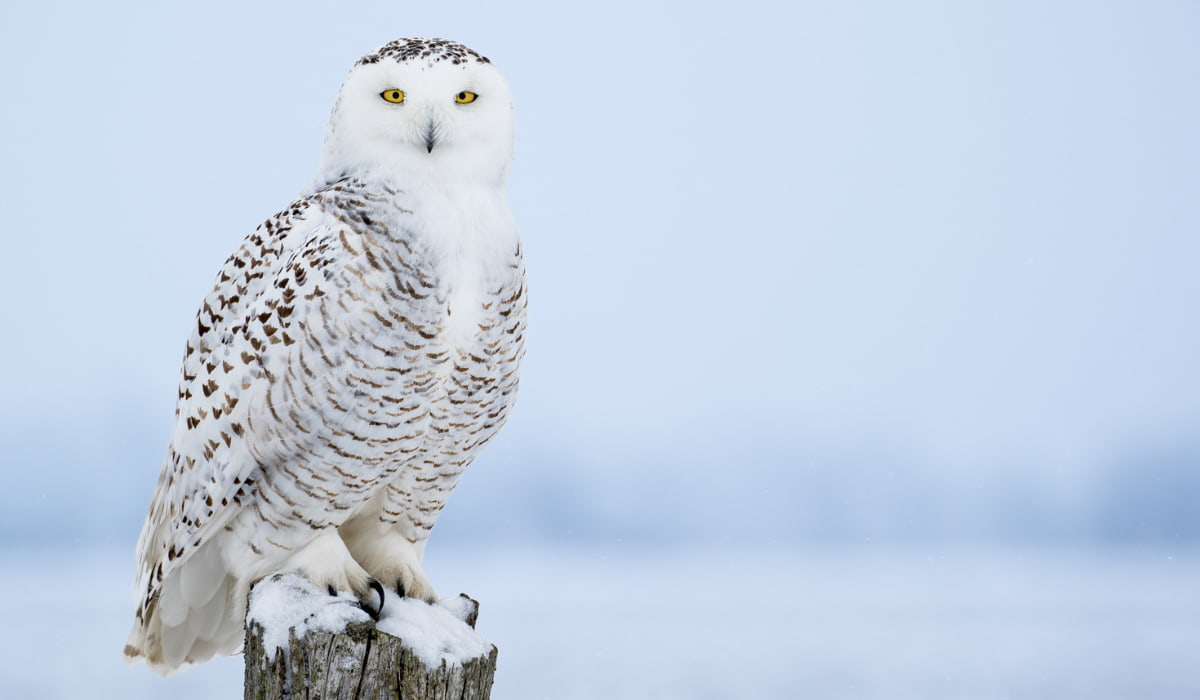
Instead of heart-shaped faces and soft tan coloring, snowy owls have:
- bright white feathers
- glowing yellow eyes
- rounded heads
- thick fluffy bodies
- giant wingspans that can reach up to five feet wide
- feather-covered legs and feet that look like fuzzy snow boots
Male snowy owls also look noticeably different from females:
- males tend to become whiter as they age
- females usually keep more dark barring and markings
- younger snowy owls are often darker before they mature
But those dramatic features aren’t just for looks. Almost everything about a snowy owl is designed to help it survive in one of the harshest environments on Earth.
Snowy Owl Adaptations
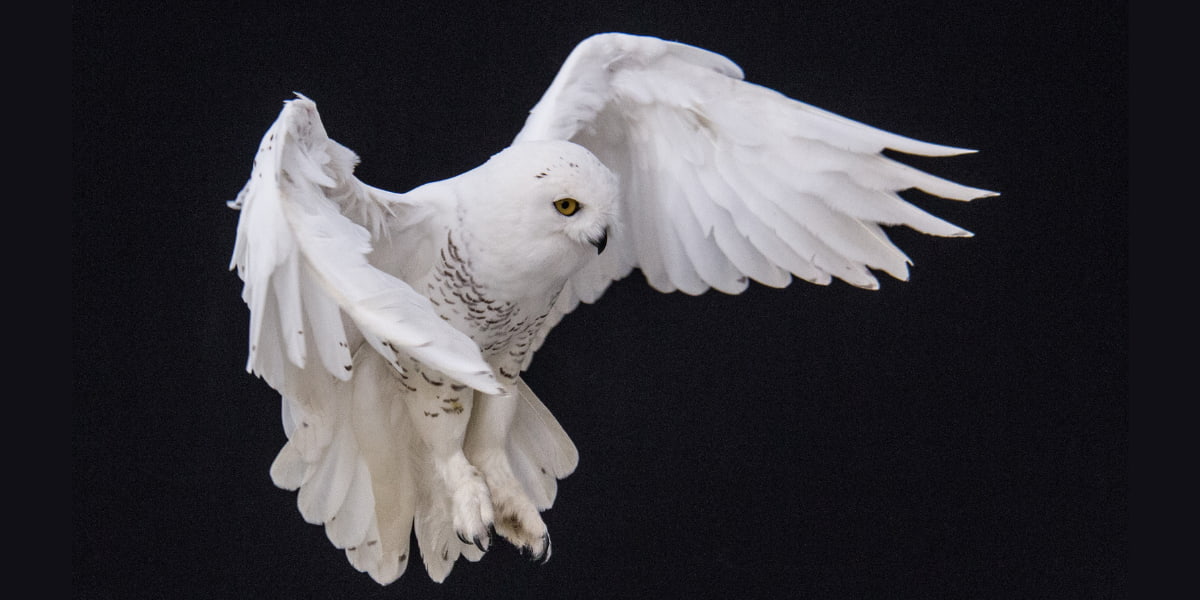
Snowy owls live in some pretty brutal conditions, especially during Arctic winters where temperatures can drop far below freezing and food isn’t always easy to find.
Over time, they’ve developed some incredible adaptations that help them survive in those environments.
Some of the coolest snowy owl adaptations include:
- extremely dense feathers that trap heat close to their bodies and protect them from freezing winds and snowstorms
- feather-covered feet and toes that help reduce heat loss while standing on snow and ice
- white feathers that act as camouflage, helping them blend into snowy Arctic landscapes while hunting
- Daytime hunting ability, which is important because Arctic summers can have nearly 24 hours of daylight
- Excellent eyesight and hearing that help them detect movement across huge open landscapes — including prey moving underneath snow
- Powerful, efficient flight that allows them to glide low across tundra and fields while searching for prey
- Energy-saving hunting behavior, since they often perch and scan wide open areas instead of constantly flying
Where Do Snowy Owls Live?

Snowy owls are Arctic birds, but they don’t only live in the snow like people sometimes imagine.
Snowy owls prefer open treeless habitats, which includes Arctic tundra during breeding season, but during winter migrations they can also be found in:
- grasslands
- marshes
- sand dunes
- farm fields
- shorelines
- airports
- open coastal areas
They are commonly found throughout Arctic regions of North America, Europe, and Asia, where they breed on open tundra landscapes with very few trees.
During winter months, some snowy owls migrate surprisingly far south depending on food availability. While you probably won’t see snowy owls in Southern California, they have occasionally been spotted in parts of Northern California during winter migrations.
Even though snowy owls sometimes move south during winter, they are still true Arctic birds at heart. Their bodies are specifically adapted for cold climates, and that’s where they thrive best.
Are Snowy Owls Nocturnal?
A lot of people assume all owls are nocturnal, but snowy owls are often active during the daytime too.
Scientists call this “diurnal” behavior, which means being active during the day.
That actually makes a lot of sense for an Arctic bird. During summer in the Arctic, the sun can stay up almost 24 hours a day, so waiting for darkness to hunt wouldn’t work very well.
Snowy owls will hunt during the day or night depending on food availability, weather, and time of year.
What Do Snowy Owls Eat?

Snowy owls are powerful hunters, and a huge part of their diet revolves around one tiny Arctic animal: the lemming.
Lemmings are small rodents that live throughout Arctic tundra habitats, and snowy owls eat a lot of them. In fact, snowy owl breeding success is often closely tied to lemming populations. When lemmings are abundant, snowy owls are usually more successful at raising chicks because there’s simply more food available.
But snowy owls aren’t picky hunters either. They’re opportunistic, which means they’ll adapt based on what food is available in the environment.
In addition to lemmings, snowy owls may also hunt:
- rabbits
- mice
- ducks
- seabirds
- fish
- other small mammals and birds
They usually hunt by scanning open ground from elevated perches or by flying low across the landscape looking for movement. Once they spot prey, they can move surprisingly fast and strike with a lot of power.
And honestly, that flexibility is a big reason they survive in such harsh environments. Arctic conditions can change quickly, so being able to adapt to different food sources gives snowy owls a major advantage.
Why Snowy Owls Are So Fascinating
There’s something about snowy owls that people connect with.
Part of it is obviously their appearance. A giant white owl with glowing yellow eyes already feels dramatic before you even learn anything about it. But snowy owls also live in this interesting space between real wildlife and storytelling.
For a lot of people, especially millennials who grew up with Harry Potter, snowy owls instantly bring up memories of Hedwig. For many kids, that’s actually the first owl they ever truly “know.” Before they learn about Arctic tundra, lemmings, or migration patterns, they already associate snowy owls with magic, loyalty, and wonder.
And that connection can become a really positive thing because it creates curiosity.
That’s exactly why snowy owl plushies became part of the Ramona Barn Owls mission-driven plushies collection. Kids immediately recognize them and connect with them because of the stories and characters they already love.
Not every future wildlife advocate starts by reading scientific studies about Arctic ecosystems.
Sometimes it starts with a movie character. Sometimes it starts with a plush owl.
And if either of those helps a child fall in love with wildlife, ask questions, and care about conservation, then that connection matters too.


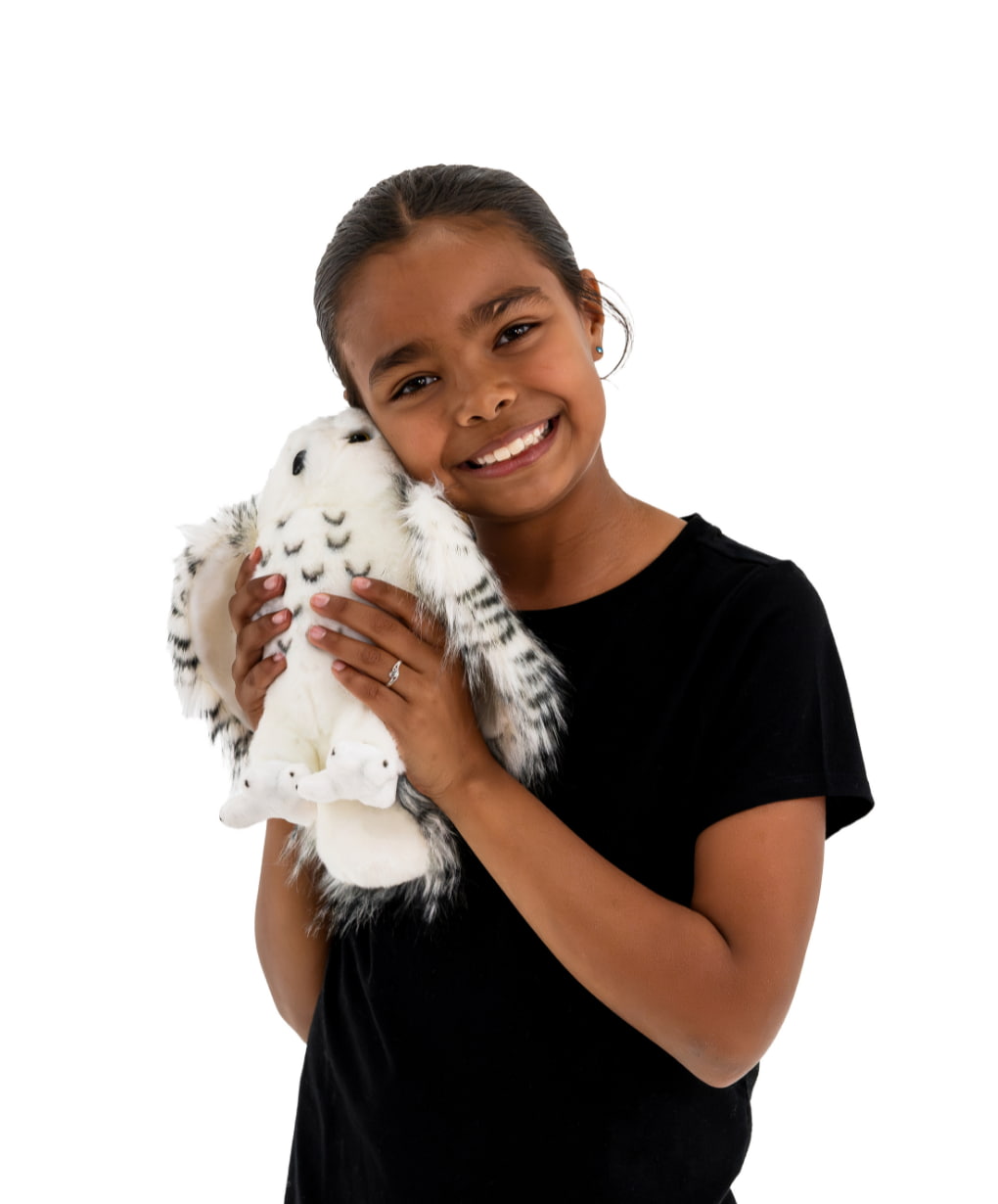

Legend the Snowy Owl Stuffed Animal – 10″
Manufacturer: Douglas Cuddle Toys
Height: 10″ tall
Material: Plush polyester with soft fill
Ages: Safe for all children over 24 months
Mission: 100% of profits fund wildlife research, rescue & education.
In stock
Helping People Fall in Love With Wildlife
At Ramona Barn Owls, the goal has never been just to show people owls.
The real mission is helping people build a connection with wildlife strong enough that they actually care about protecting it.
Because once people care about animals, they start paying attention to the bigger picture too. They start learning about habitat loss, ecosystem balance, and one of the biggest threats facing raptors today: rodent poison.
Rodenticides don’t just kill rodents. They move up the food chain. Owls, hawks, eagles, foxes, bobcats, and other wildlife can all be poisoned after eating contaminated prey. It’s one of the reasons wildlife education and rodenticide-free pest control matter so much to us.
Whether it’s a barn owl living here in Ramona or a snowy owl hunting somewhere across the Arctic tundra, every owl has the ability to inspire curiosity, wonder, and respect for the natural world.
If you’d like to support the Ramona Barn Owls mission, you can:
- watch and share our 24/7 barn owl livestream
- help spread awareness about rodenticide-free pest control
- shop our mission-driven clothing line, and raptor plushies collection which help support our educational efforts and conservation messaging
![Every Tee Tells a Story – From rescues to rodent control, our designs speak up for owls. [Shop Owl-Inspired Apparel]](https://ramonabarnowls.com/wp-content/uploads/Every-Tee-Tells-a-Story-1.jpg)
![Book the Fairy Owlet Mother – Bring Stacey’s owl magic to your school or event. [Book a Presentation]](https://ramonabarnowls.com/wp-content/uploads/Book-the-Fairy-Owlet-Mother-1.jpg)

![Matching fits for the whole flock. Because protecting wildlife is even sweeter when you do it together. [Shop the Family Collection]](https://ramonabarnowls.com/wp-content/uploads/Matching-fits-for-the-whole-flock-1.jpg)


![Ridiculously Soft Whoo-Wear [Shop Now]](https://ramonabarnowls.com/wp-content/uploads/Ridiculously-Soft-Whoo-Wear-1.jpg)
![Hoot Happiness Guarantee – Shop risk-free with free returns & exchanges. [Shop Now]](https://ramonabarnowls.com/wp-content/uploads/Hoot-Happiness-Guarantee-1.jpg)
![Subscribe on YouTube – Join 1,000+ owl lovers following our live owl adventures. [Subscribe Now]](https://ramonabarnowls.com/wp-content/uploads/Subscribe-on-YouTube-1.jpg)