Key Takeaways
- Not all owls are night owls. Some are nocturnal, yes—but others are diurnal (daytime hunters) or crepuscular (active at dawn and dusk).
- Barn Owls = night shift. Our RBO residents are classic nocturnal hunters, snoozing in the day and feasting on rodents by night.
- Burrowing Owls = day shift. These long-legged feathered meerkats live underground and thrive in broad daylight.
- Crepuscular species = twilight tricksters. Owls like the Snowy and Great Horned often favor dawn and dusk hours.
- Rule-breakers exist. Baby owlets sometimes wander out early, or adults get spooked into daytime cameos—nature doesn’t always follow the rulebook.
- Built to hunt. With massive eyes, asymmetrical ears, sharp talons, and hooked beaks, owls are designed for precision hunting.
- Natural pest control heroes. One barn owl family can devour 1,000+ rodents in a season—no poisons, no traps, just talons.
Are Owls Nocturnal?
The storybooks all agree: owls are creatures of the night.
But here’s the twist—are all owls nocturnal? Nope.
Some hunt when the sun is high. Others party at twilight like they’re at a feathered happy hour. And some, yes, keep to the midnight shift like the stories say.
At Ramona Barn Owls, we see it all unfold live from our boxes—sometimes in hilarious, unexpected ways.
The Nighttime Stereotype
For centuries, owls have been painted as mysterious night watchers. It’s not completely wrong: many species really are built for nighttime life. Their eyes gather every glimmer of moonlight. Their feathers are designed for whisper-quiet flight.
But the blanket statement “all owls are nocturnal” is not totally true.
Different types of owls keep very different schedules. Here are the three big categories:
- Nocturnal — Night owls who hunt under the stars.
- Diurnal — Daylight hunters, active when the sun’s out.
- Crepuscular — Twilight prowlers, busiest at dawn and dusk.
Nocturnal Owls: The Night Shift Crew
When most people picture owls, this is what they think of: classic night hunters like Barn Owls (our beloved Ramona Barn Owls residents) and Great Horned Owls.
And it’s true—the vast majority of owl species are nocturnal, meaning they hunt under the stars and snooze through the daylight hours. Hunting at night gives them an advantage: fewer predators, less competition, and cooler air for long flights.
As our Fairy Owlet Mother, Stacey, puts it: “The sky is divided and the hawks are day and the owls are night.”
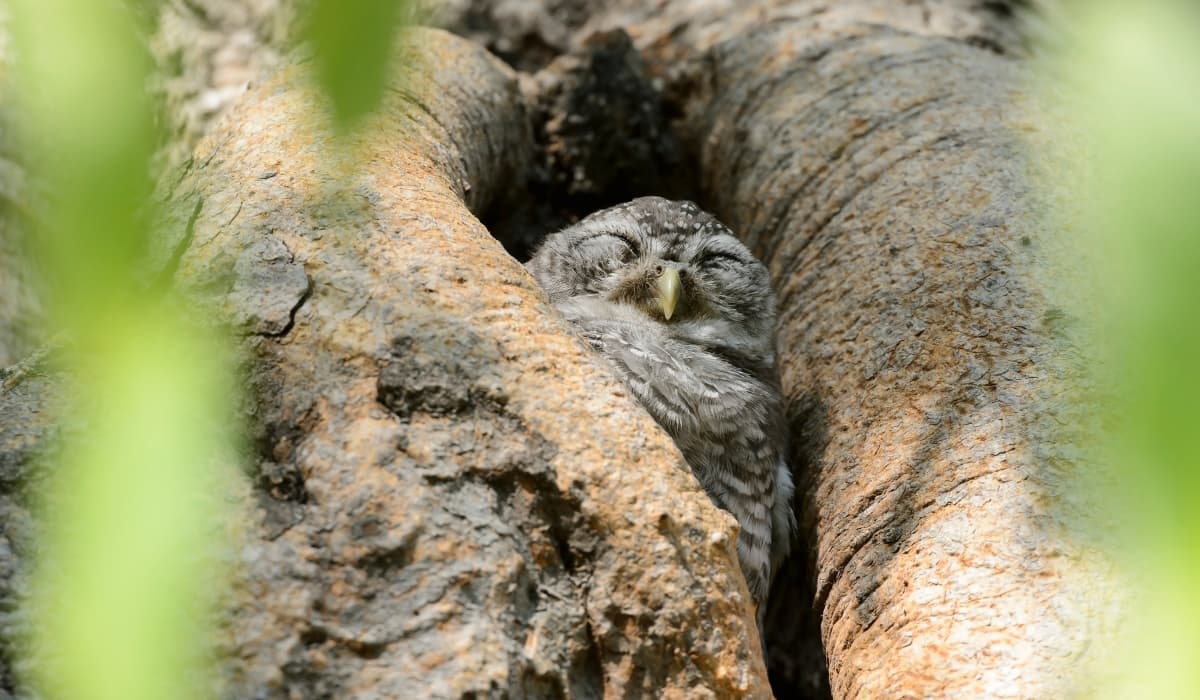
Staying hidden in daylight isn’t just a preference, it’s a survival strategy to avoid becoming hawk food. Peek into our box cam mid-morning and you’ll often see sleepy owlets piled together like feathery marshmallows.
Of course, not every owl sticks to the handbook—more on those “daylight rebels” next.
Diurnal Owls: Yes, Daytime Owls Exist!
So if not all owls are night creatures, who are the rebels? The diurnal owls—the daytime specialists.
Science Spotlight: A 2022 PNAS study found that owls aren’t nearly as rigid as the myths make them out to be. Sure, plenty are nocturnal, but researchers found that some species—especially the ones strutting around open grasslands or living up north where the summer sun barely sets—decided, “Eh, daytime works too.” Translation: owls aren’t locked into one lifestyle. Their hunting schedule is flexible depending on habitat, light, and whatever survival throws their way. Basically, owls make their own rules.
The Burrowing Owl is one that we would spot here in Southern California. Unlike our box-nesting barn owls, burrowing owls live underground, often in abandoned prairie dog or ground squirrel burrows.
They’ve got comically long legs and an upright stance that makes them look like feathered meerkats. And you can spot them going about their business under full sunlight.
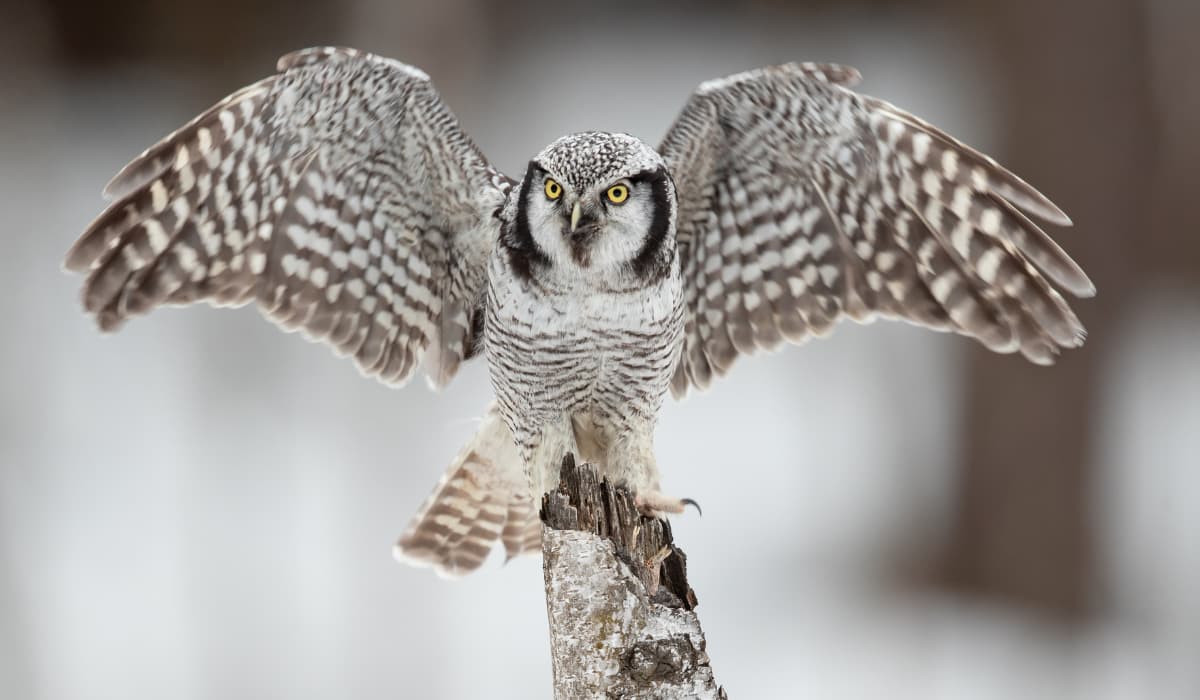
Other members of the day shift include the northern hawk owl, northern pygmy owl, and short-eared owl, all of which thrive under bright skies.

Crepuscular Owls: Twilight Tricksters
And then there are the in-betweeners—crepuscular owls, most active at dawn and dusk. Instead of choosing night or day, they thrive in the glow of sunrise and sunset, slipping into the world just as light and shadow trade places.
Species like the Snowy Owl and Great Horned Owl are often crepuscular—preferring the soft light of sunrise and sunset over the extremes of noon or midnight.
And some owls we casually label “nocturnal” are really crepuscular once you watch their habits.
We see this play out on our livestream all the time. Owlets get too excited and go out early, shuffling onto the perch at sunset, blinking into the fading light, even while hawks are still out hunting.
It’s risky, but baby owls don’t always play it safe.
When Owls Break the Rules
So owls may have biological tendencies, but nature is messy.
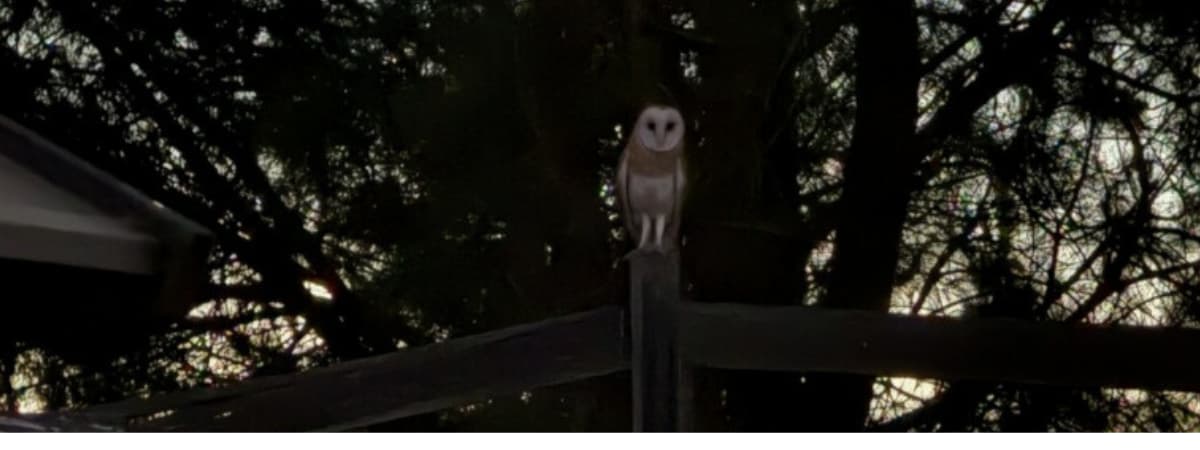
One minute your “night owl” is snoozing, the next it’s making a daylight cameo on our 24/7 cam.
Sometimes it’s the babies, eager little knuckleheads who just can’t wait for darkness. Other times it’s pure circumstance. We’ve seen things like bees pestering the owl box, a tree branch shaking during maintenance on a box, and a brutal heat wave pushing babies out into a nearby tree at high noon.
In short: sometimes you just get daytime owls. And thanks to our livestream, you can watch it happen in real time.

Owl Superpowers: Built for the Hunt
Different owl species have evolved not just different schedules, but different ways of hunting to match their habitats. Some patrol wide-open grasslands in daylight, chasing prey on the ground. Others perch silently in dense forests, ambushing anything that scurries below.
Whether they’re night-shift hunters, dawn-and-dusk tricksters, or daytime rebels, owls all share one thing: they are absolute hunting machines. And nature didn’t hold back when it designed them.
- Super-eyes: so big they fill most of their skull, letting them catch even the faintest movement in low light—like a mouse in the moonlight under a spotlight.
- Satellite ears: many species like barn owls rock uneven ear openings which lets them triangulate sound with pinpoint accuracy—like nature’s built-in GPS. It’s so precise they can snag prey rustling under a blanket of snow, grass, or leaves.
- Silent flight: serrated wing feathers break up turbulence and dampen noise, letting owls swoop without a whisper. Prey rarely hears what hit them.
- Built-in cutlery: talons like switchblades (giant bird nails with superpowers) and hooked beaks sharp enough to snatch, pierce, and tear dinner with scary precision.
- Head-turn: since their eyes can’t move in their sockets, owls can rotate their necks up to 270°. Very effective.
These adaptations are survival gear. Every one makes owls more efficient hunters, whether it’s midnight, sunrise, or high noon.
What Do Owls Eat at Night?
With all that hardware, the menu is exactly what you’d expect: fearless. Owls aren’t picky eaters. Beyond rodents, they’ll take rabbits, chipmunks, insects, scorpions, skunks, fish, and sometimes even other owls.
As for our barn owls here at RBO… they’re rodent-eating legends, primarily feasting on mice, voles, and rats. During the busy season, one family can devour over 2,000!. That’s pest control at it’s finest. No poison required.
So, Are All Owls Nocturnal?
Here’s the verdict: are all owls nocturnal? No. Some are nocturnal, yes. Others are diurnal, living their best lives under the sun. And many are crepuscular, haunting the edges of day like feathered dusk dancers.
What’s constant is their unpredictability.
Whether it’s high noon or midnight, our owls remind us that the wild doesn’t follow our rules. And that’s exactly why we love them.
Want to see this play out live? Watch our livestream and catch the owls hunting at midnight, stretching at dawn, or napping in the mid-afternoon.
Owl FAQs: Your Questions Answered
Do owls sleep during the day?
Most owls do, yes—especially nocturnal species like Barn Owls. But diurnal owls, like Burrowing Owls, flip the script: they rest at night and stay wide awake under the sun.
Why are owls associated with the night?
Big eyes. Eerie calls. Silent flight. Put that together and you get the perfect recipe for ghost stories and Halloween decorations. Many owls really are nocturnal, so the stereotype stuck. But the reality is more colorful—owls keep their own schedules, and not all of them punch the night shift clock.
What do owls eat at night?
Rodents are at the top of the menu—mice, voles, rats. One Barn Owl family can gobble up more than 2,000 in a single season! That’s why we call them nature’s pest control team. But depending on the species and habitat, the owl menu can be broad and fearless: rabbits, chipmunks, skunks, scorpions, insects, fish, and sometimes even other owls.
How do owls hunt in the dark?
Owls are like the superheroes of the raptor world. Their huge eyes pull in every scrap of moonlight. Many species—including Barn Owls—have uneven ear openings, which let them triangulate sound with crazy precision. They can literally hear a mouse rustling under a blanket of snow and nail the strike. Add razor-sharp talons and a hooked beak, and you’ve got a hunting machine.
Are owls dangerous to humans?
Not really. Most owls want nothing to do with us. They’re hunters of small prey, not people. The only time an owl might swoop at a human is if you wander too close to their nest during breeding season—and even then, it’s more about protecting their chicks than attacking you.
Why do owlets sometimes come out during the day?
Because they’re knuckleheads. Seriously. Baby owls don’t always follow the handbook. Sometimes it’s too hot in the box. Sometimes bees or maintenance disturb them. And sometimes they’re just overly eager to test their wings.
![Every Tee Tells a Story – From rescues to rodent control, our designs speak up for owls. [Shop Owl-Inspired Apparel]](https://ramonabarnowls.com/wp-content/uploads/Every-Tee-Tells-a-Story-1.jpg)
![Book the Fairy Owlet Mother – Bring Stacey’s owl magic to your school or event. [Book a Presentation]](https://ramonabarnowls.com/wp-content/uploads/Book-the-Fairy-Owlet-Mother-1.jpg)

![Matching fits for the whole flock. Because protecting wildlife is even sweeter when you do it together. [Shop the Family Collection]](https://ramonabarnowls.com/wp-content/uploads/Matching-fits-for-the-whole-flock-1.jpg)


![Ridiculously Soft Whoo-Wear [Shop Now]](https://ramonabarnowls.com/wp-content/uploads/Ridiculously-Soft-Whoo-Wear-1.jpg)
![Hoot Happiness Guarantee – Shop risk-free with free returns & exchanges. [Shop Now]](https://ramonabarnowls.com/wp-content/uploads/Hoot-Happiness-Guarantee-1.jpg)
![Subscribe on YouTube – Join 1,000+ owl lovers following our live owl adventures. [Subscribe Now]](https://ramonabarnowls.com/wp-content/uploads/Subscribe-on-YouTube-1.jpg)