Quick Overview
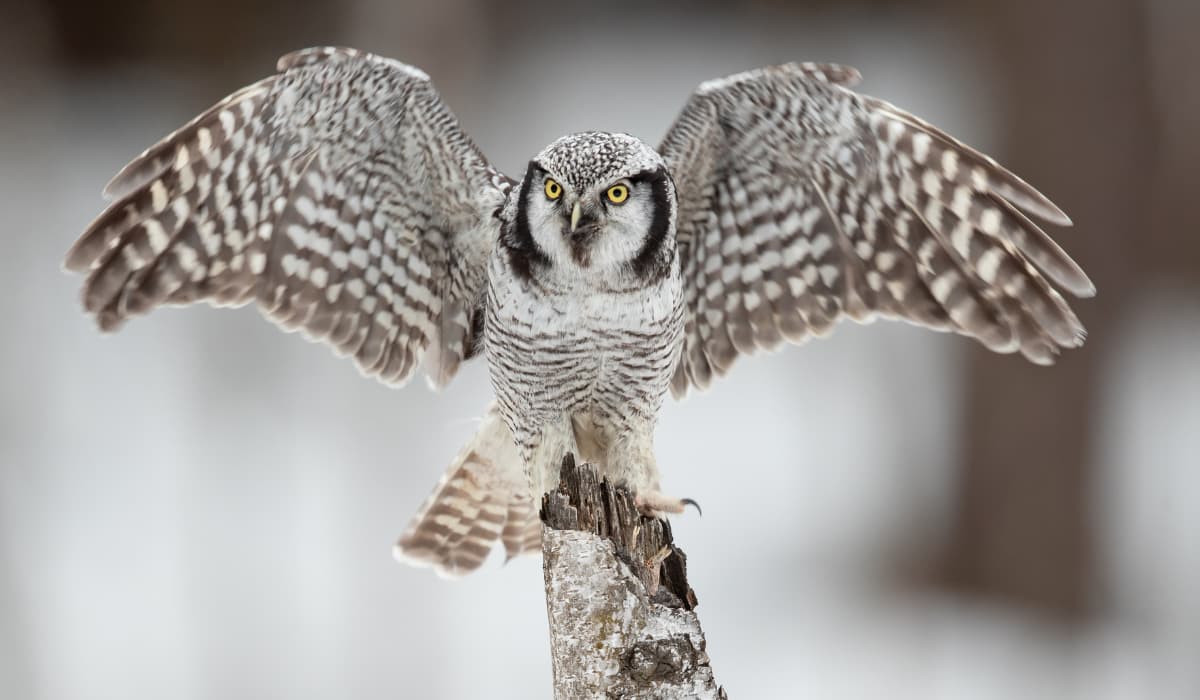
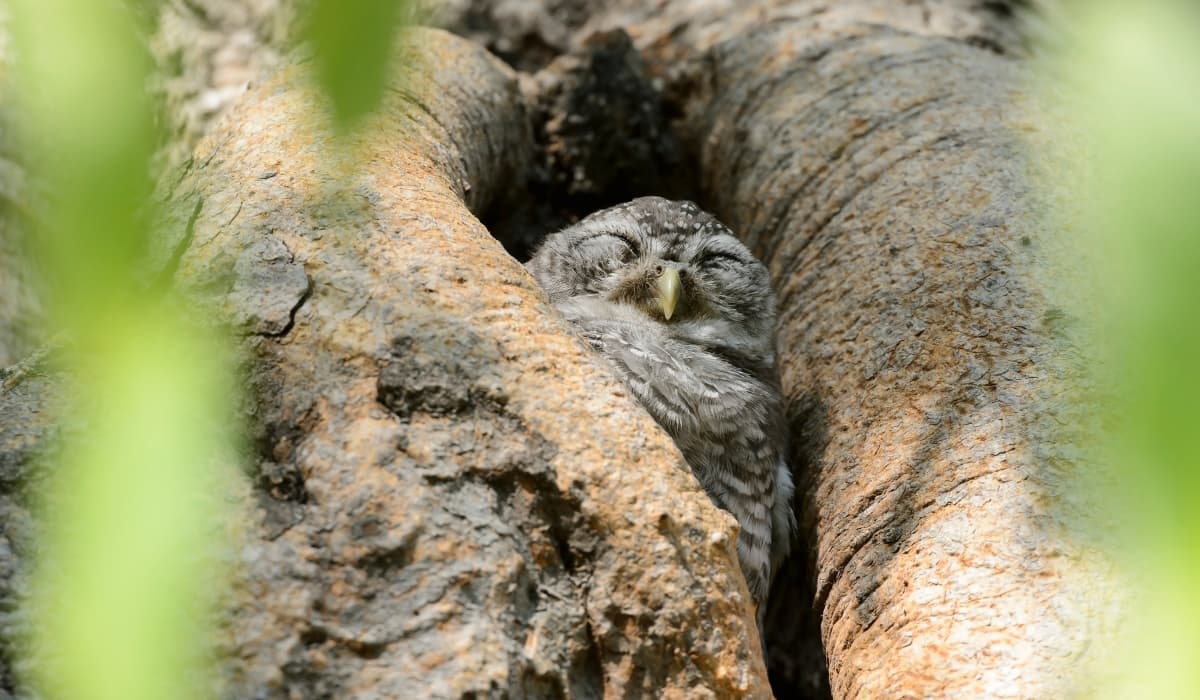
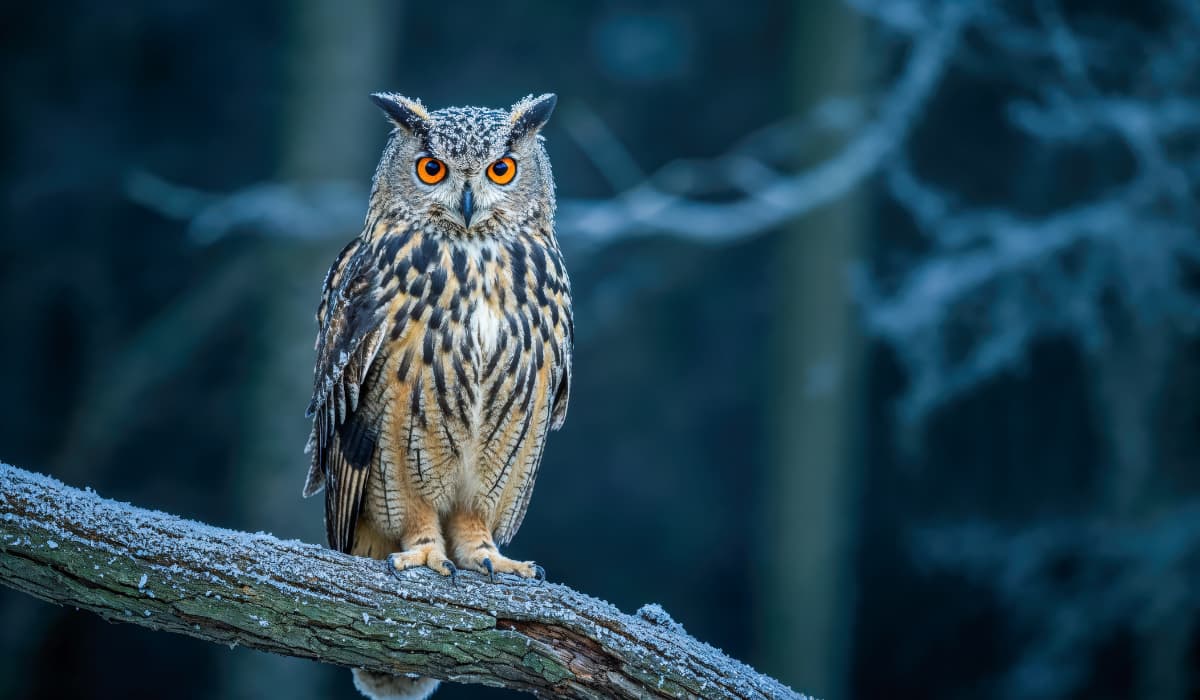
- Most owls come in natural earth tones like brown, gray, white, and tan because these colors help them blend into their environment.
- Owl feather patterns—spots, streaks, and speckles—break up the bird’s outline, making it harder for predators or prey to spot them.
- Different owl species have different color patterns. For example, snowy owls are mostly white, while great gray owls have bark-like gray feathers.
- Male and female barn owls can often be distinguished by their spots—males usually have very few, while females can have dozens.
- Experienced owl watchers can sometimes recognize individual owls by their unique feather patterns.
Real Owl Colors
Owls don’t come in tropical parrot colors or neon hummingbird shades. You won’t see bright reds or electric blues flying through the forest at night.
Instead, owls wear the colors of the earth itself: bark brown, snowy white, smoky gray, sandy tan, cinnamon, maple, and mocha.
But those soft browns, ghostly whites, and smoky grays are actually part of a brilliant survival strategy. Every feather pattern, every speckle, every subtle shade helps an owl disappear into its surroundings like a feathered ninja.
At Ramona Barn Owls, we’ve spent years watching barn owls up close on the livestream.
And once you start paying attention to owl colors, you realize those feathers are telling a story.
You Can Tell a Lot About an Owl From Its Colors
At first glance, owl feathers’ colors might seem simple—mostly browns, whites, and grays.
But those colors actually tell you a lot about the owl you’re looking at.
- Color can help identify the species. Different owls have very different feather patterns. A snowy owl looks nothing like a great gray owl, and neither of them looks like a barn owl. The color combinations, patterns, and markings are often the quickest way birdwatchers recognize which species they’re seeing.
- Those colors help owls survive. Owls evolved feather patterns that blend into their environments—forest bark, snowy tundra, desert grasslands, or old wooden barns. Their colors act as camouflage, helping them disappear when they’re resting during the day or sneaking up on prey at night.
- Colors can reveal differences between individual owls. Within the same species, no two owls look exactly alike. Some are darker. Some are lighter. Some have lots of spots. Others have almost none. Experienced owl watchers can sometimes recognize specific birds just by their feather patterns.
At Ramona Barn Owls, Stacey has identified returning owls this exact way.
It’s like every owl carries its own little feather fingerprint.
Owl Colors Help Identify Different Species
One of the easiest ways people recognize different owls is by looking at their colors.
Before you even notice the shape of the bird or hear its call, the feather pattern can often give the species away.
Barn owls are a great example—the owl with a white chest. Their warm golden backs, pale undersides, and that unmistakable heart-shaped face make them pretty hard to confuse with anything else.
Other owls look completely different.
Great gray owls, for example, are covered in smoky gray feathers with dark streaks that make them look almost exactly like tree bark. Snowy owls are mostly white, which makes them easily recognizable as the bright hunters of the Arctic tundra. Burrowing owls, which spend much of their time on the ground, are sandy brown with pale spots that blend into dry grasslands and desert soil.
Every owl species has its own mix of colors, patterns, and markings, so you’re often seeing a clue about which species it might be.
But those colors didn’t evolve just to make birdwatchers’ lives easier.
They’re there for a much more important reason.
Survival.
Owl Colors Help Owls Survive

Owl colors play a direct role in survival by helping the birds stay hidden from both predators and prey.
Most owls hunt at night but spend their daytime hours resting. During the day they often perch quietly in trees, barns, or fence posts—places where they could easily be spotted by other birds.
Crows, ravens, and hawks are especially quick to notice an exposed owl. When they do, they often begin mobbing it, repeatedly diving and harassing the owl until it leaves the area.
That’s why owl feather colors evolved to blend into the environments where they rest.
Browns and grays mimic tree bark and forest shadows. Sandy colors blend into dry grasslands. White feathers allow Arctic owls to disappear into snowy landscapes. Instead of standing out, owls melt into the background around them.
The patterns in their feathers help even more. Speckles, streaks, and bars break up the outline of the owl’s body, making it difficult for other animals to recognize the shape of a bird. When an owl sits perfectly still against a tree trunk, fence post, or barn beam, those patterns can make it surprisingly hard to detect.
Barn owls have an especially clever camouflage advantage.
From above, their backs are warm golden-brown with darker speckles that help them blend into their barn owl habitat, including wood beams, barns, and tree branches where they rest during the day.
But from below, their underside is usually pale—often creamy white or buff-colored.
That pale belly helps the owl blend into the dim night sky as it glides overhead. To a mouse or vole looking up from the ground, the owl’s body can almost disappear against the darkness above.
So those soft browns, whites, and grays aren’t just beautiful—they’re part of a carefully evolved camouflage system that helps owls stay hidden, avoid harassment from other birds, and hunt more effectively.
Owl Colors Reveal Individual Differences
Even within the same species, owl colors can vary quite a bit.
Barn owls are a perfect example of this.
One of the easiest things to spot is the difference between males and females.
Male barn owls usually have very few spots—sometimes anywhere from zero to around fifteen—and their heads tend to be lighter in color.
Females, on the other hand, often have many more spots, sometimes thirty or forty scattered across their chest and belly.
Some females look almost completely freckled.
Once you start paying attention to those little details, it becomes much easier to tell individual owls apart.
Over time, those patterns become familiar—like a feather fingerprint.
A Curious Question: Is There a Blue Owl Species?
Every once in a while someone will say they saw a blue owl.
Photos online sometimes show owls with a cool bluish glow, especially when they’re flying at night under moonlight or caught on certain camera settings. Pale owls—like barn owls—can sometimes look almost silver or blue in photos.
But here’s the truth: there isn’t actually a blue owl species.
Owls simply don’t have the pigments needed to make blue feathers. Most owl colors come from natural pigments that create shades of brown, gray, tan, and white.
So what makes some owls look blue?
Usually it’s lighting.
Moonlight, camera sensors, and even certain angles can reflect off pale feathers in a way that creates a bluish or silvery tint. According to the Smithsonian Migratory Bird Center, birds don’t actually produce blue using pigments—the color we sometimes see is caused by the way light interacts with their feathers.
In other words, the owl isn’t really blue. The light is just playing tricks on our eyes.
Still, when a pale owl glides silently through the night under moonlight, it’s easy to see why people think they spotted something magical.
And it kind of does look magical.
See Owl Colors for Yourself
The best way to truly appreciate owl colors is to watch them in real life.
Our 24/7 owl livestream gives viewers a front-row seat to the lives of wild barn owls—watching them nest, raise owlets, and reveal all the subtle differences in their feathers.
Once you start watching regularly, you begin to notice the details: the lighter head of a male, the freckles across a female’s chest, and the rich maple or mocha tones in their wings.
Over time, those little differences become familiar, and you start recognizing individual birds.
You might recognize Maple or Mocha (yes, many of the owls at Ramona Barn Owls are named after their colors).
If you’d like to see these incredible birds up close, tune into the Ramona Barn Owls livestream and follow along during nesting season.
And if you’d like to help support our mission—educating people about owls and promoting poison-free pest control—you can also support the work we do by shopping our owl clothing and gear.
Every purchase helps fund wildlife education and the protection of the owls we all love.
![Every Tee Tells a Story – From rescues to rodent control, our designs speak up for owls. [Shop Owl-Inspired Apparel]](https://ramonabarnowls.com/wp-content/uploads/Every-Tee-Tells-a-Story-1.jpg)
![Book the Fairy Owlet Mother – Bring Stacey’s owl magic to your school or event. [Book a Presentation]](https://ramonabarnowls.com/wp-content/uploads/Book-the-Fairy-Owlet-Mother-1.jpg)

![Matching fits for the whole flock. Because protecting wildlife is even sweeter when you do it together. [Shop the Family Collection]](https://ramonabarnowls.com/wp-content/uploads/Matching-fits-for-the-whole-flock-1.jpg)


![Ridiculously Soft Whoo-Wear [Shop Now]](https://ramonabarnowls.com/wp-content/uploads/Ridiculously-Soft-Whoo-Wear-1.jpg)
![Hoot Happiness Guarantee – Shop risk-free with free returns & exchanges. [Shop Now]](https://ramonabarnowls.com/wp-content/uploads/Hoot-Happiness-Guarantee-1.jpg)
![Subscribe on YouTube – Join 1,000+ owl lovers following our live owl adventures. [Subscribe Now]](https://ramonabarnowls.com/wp-content/uploads/Subscribe-on-YouTube-1.jpg)